
Your Dream of Studying in Australia Starts Here
Discover world-class education, vibrant student life, and life-changing opportunities — with expert guidance from Acadex Bangladesh every step of the way.
Study in Australia as a Bangladeshi Student
Australia has firmly established itself as one of the world’s most sought-after study destinations — and for good reason. With a thriving Bangladeshi student community, globally recognised qualifications, and a safe, multicultural society, Australia offers an unparalleled environment to grow academically and personally.
Whether you aspire to study Engineering, Business, Information Technology, Health Sciences, or the Arts, Australian institutions have a programme perfectly tailored for you. Beyond the classroom, Australia provides strong post-study work pathways, competitive tuition fees compared to the UK or USA, and a quality of life that consistently ranks among the world’s best.
Cities like Melbourne, Sydney, Brisbane, Adelaide, and Perth welcome thousands of Bangladeshi students each year into their vibrant, diverse communities. At Acadex Bangladesh, we are here to guide you through every stage of the process — from choosing the right course to landing in Australia with confidence.
Why Study in Australia?
World-Class Universities
Australia is home to 8 of the world’s top 100 universities according to QS World University Rankings — ensuring your degree carries global prestige and is recognised by employers and institutions worldwide.
Strong Career Pathways
International students can work up to 48 hours per fortnight during their studies. After graduating, the Temporary Graduate Visa (Subclass 485) provides up to 4 years of full-time work rights in Australia, helping you gain invaluable local experience.
More Affordable Than UK & USA
Australia offers competitive tuition fees and a lower overall cost of living compared to many other top Western study destinations. Generous scholarships are also available to further reduce the financial burden.
Vibrant Multicultural Society
Australia’s diversity is one of its greatest strengths. You will study alongside peers from over 200 nationalities, broadening your worldview, cultural understanding, and professional network.
Globally Respected Qualifications
An Australian degree is recognised and respected by employers, universities, and governments worldwide — giving Bangladeshi graduates a decisive competitive edge wherever their career takes them.
Strong Student Protections
The ESOS Act 2000 (Education Services for Overseas Students) legally safeguards all international students, ensuring your study programme meets strict Australian government quality and consumer protection standards.
Research-Focused Education
Australian universities invest heavily in research, innovation, and industry collaboration. Students benefit from access to world-class facilities, industry partnerships, and research-integrated curricula that prepare graduates for the real world.
Incredible Quality of Life
From the Great Barrier Reef and Bondi Beach to the iconic Sydney Opera House and Melbourne’s café culture, Australia offers a stunning lifestyle outside the lecture hall that very few countries can match.
Established Bangladeshi Community
Australia has a large and welcoming Bangladeshi diaspora — making it easier to settle in, find familiar food, cultural events, and a strong support network from the moment you arrive.
Quick Facts — Study in Australia
Primary Language
English
English Tests Accepted
IELTS, TOEFL, PTE Academic
Qualification Levels
Diploma, Bachelor’s, Master’s, PhD
Main Intakes
February/March & July
Popular Courses to Study in Australia?
| Course | Duration | Annual Tuition (AUD) | Career Paths |
|---|---|---|---|
| Engineering | 3–4 Years | $25,000 – $45,000 | Civil, Mechanical, Aerospace, Electrical |
| Information Technology | 2–4 Years | $20,000 – $35,000 | Software Dev, Cybersecurity, Data Science, AI |
| Business & Management | 3–4 Years | $20,000 – $40,000 | Finance, Marketing, HR, International Business |
| Nursing & Health Sciences | 2–4 Years | $25,000 – $40,000 | Registered Nurse, Healthcare Management |
| Hospitality & Tourism | 2–3 Years | $20,000 – $35,000 | Hotel Management, Event Planning, Culinary Arts |
| Education & Teaching | 4 Years | $22,000 – $36,000 | Primary, Secondary, Special Education |
| Architecture & Design | 3–5 Years | $24,000 – $42,000 | Urban Planning, Interior Design, Construction |
To study in Australia from Bangladesh, you will need to obtain a Student Visa (Subclass 500). The programmes above are designed to provide both strong theoretical foundations and practical, industry-relevant skills — making Australian graduates highly competitive in the global job market.
Top Universities in Australia (QS Rankings 2026)
| University | Location | QS World Ranking |
|---|---|---|
| University of Melbourne | Melbourne | #13 |
| University of Sydney | Sydney | #18 |
| University of New South Wales (UNSW) | Sydney | #19 |
| Australian National University (ANU) | Canberra | #30 |
| University of Queensland | Brisbane | #40 |
| Monash University | Melbourne | #42 |
| University of Western Australia | Perth | #72 |
Requirements to Study in Australia
Academic Qualifications
You must hold the appropriate academic credentials for your chosen level of study. For undergraduate programmes, successful completion of the HSC (Higher Secondary Certificate) or an equivalent qualification is typically required. For postgraduate study, a recognised bachelor’s degree is necessary. Each university sets its own specific entry criteria.
English Language Proficiency
Since all instruction is delivered in English, you must demonstrate language proficiency through a recognised test. Most universities accept IELTS (typically an overall band of 6.0–7.0), TOEFL iBT, or PTE Academic. Minimum score requirements vary by institution and programme level.
Proof of Financial Capacity
The Australian government requires evidence that you can cover your tuition fees, living expenses, and travel costs. This is typically demonstrated through recent bank statements, a sponsor letter, or proof of a scholarship award.
Overseas Student Health Cover (OSHC)
OSHC is mandatory for all international students in Australia. This health insurance must be purchased from an approved provider before your student visa is granted and must remain active for the full duration of your enrolment.
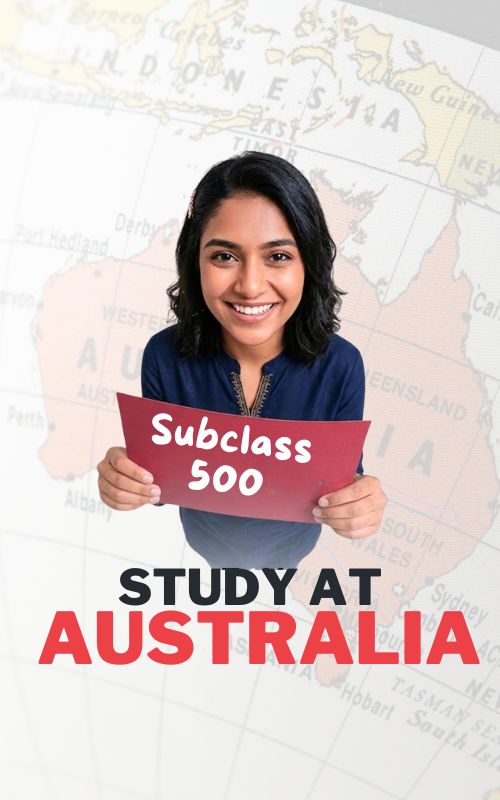
Student Visa — Subclass 500
Once you receive your Confirmation of Enrolment (CoE) from an Australian institution, you can apply for your Student Visa (Subclass 500). The application requires meeting health and character requirements and demonstrating genuine temporary entrant (GTE) intentions. The standard visa fee is AUD 650.
Genuine Temporary Entrant (GTE) Statement
Australian immigration authorities require students to demonstrate that their primary reason for applying is to study, not to use the student visa as a migration pathway. Our counsellors at Acadex will help you prepare a compelling and authentic GTE statement.
Intakes to Study in Australia
Australian universities generally offer two main intakes each year for international students:
February / March Intake — Primary Intake
- Application Period: August to November
- Semester Begins: February or March
- This is the main intake of the Australian academic year and offers the widest selection of courses across all disciplines and qualification levels. It is strongly recommended that you begin your preparations at least 6 to 8 months in advance to allow sufficient time for documentation, scholarship applications, and visa processing.
July Intake — Alternate Intake
- Application Period: December to April
- Semester Begins: July
- The July intake is an excellent option for students who were not prepared for the February intake or who simply prefer to begin mid-year. While course availability is slightly more limited, a strong selection of undergraduate and postgraduate programmes remains accessible at most major universities.
Post-Study Work Opportunities in Australia
One of Australia’s greatest advantages for international graduates is its clear, generous, and structured post-study work framework. After completing your degree, a range of visa pathways allow you to gain valuable Australian work experience and build a pathway toward permanent residency.
Temporary Graduate Visa — Post-Study Work Stream (Subclass 485) Graduates who have completed a bachelor’s, master’s, or doctoral degree at an Australian institution are eligible for this visa. Depending on your qualification level, it grants full-time work rights for 2 to 4 years — giving you the time and opportunity to launch your career in Australia.
Skilled Occupation List (SOL) — Employer-Sponsored Pathways Graduates whose qualifications align with occupations listed on Australia’s Skilled Occupation List may qualify for employer-sponsored work visas such as the Employer Nomination Scheme (Subclass 186) or the Temporary Skill Shortage Visa (Subclass 482), providing a clear route to long-term employment and eventual permanent residency.
Regional Sponsored Migration Scheme (RSMS) For graduates willing to live and work in regional Australia, the RSMS offers an accelerated pathway to permanent residency through employer sponsorship. Studying or working regionally can also unlock extended post-study work rights not available to metropolitan graduates.
During Study — Part-Time Work Rights While enrolled, international students are permitted to work up to 48 hours per fortnight during academic terms and unlimited hours during scheduled university holiday periods. This allows you to earn income, build local work experience, and expand your professional network simultaneously.
Industry-Specific Demand Healthcare, engineering, information technology, education, and construction are consistently among Australia’s highest-demand sectors. Graduates in these fields often secure employment quickly after graduation and are well-positioned for skilled migration programmes.
Frequently Asked Questions
The total cost varies depending on your chosen institution, programme, and city. Tuition fees typically range from AUD 20,000 to AUD 50,000 per year, with monthly living costs of approximately AUD 1,400 to AUD 3,000.
The standard Student Visa (Subclass 500) fee is AUD 650. Additional expenses may include health examinations, biometrics, and police certificates. Applicants below 18 years of age may incur additional costs for guardian visa requirements.
Engineering, information technology, healthcare, accounting, and skilled trades tend to align most closely with Australia's Skilled Occupation List. However, PR eligibility also depends on work experience, English proficiency, skills assessments, and specific visa requirements. We recommend speaking with an Acadex counsellor for tailored advice.
Most Australian universities require an overall IELTS band score between 6.0 and 7.0, with no individual band below 6.0. Postgraduate and health-related programmes typically have higher requirements. PTE Academic and TOEFL iBT are also widely accepted.
Yes. International students in Australia are permitted to work up to 48 hours per fortnight during term time and unlimited hours during scheduled university holidays, allowing you to earn income and gain practical work experience.
Start Your Australian Journey with Acadex Bangladesh
At Acadex Bangladesh, we are committed to making your dream of studying in Australia a reality. Our certified education counsellors provide free, end-to-end support — from selecting the right course and university to visa applications, scholarships, and pre-departure preparation.
Book your FREE consultation today and take the first step toward your future in Australia.